

Greywater & Blackwater
GREYWATER & BLACKWATER
Wastewater on board – an invisible pollution stream
While we often discuss oil spills or plastic pollution, one of the most underestimated threats to our seas comes from something as ordinary as using water on board. Many sailors and recreational boat users don’t pay much attention to what happens to water from toilet flushes, showers and sinkful of dishes. Yet, onboard life generates significant amounts of two main types of wastewater: blackwater, coming from toilets, and greywater, coming from showers, galley and bathroom sinks, and sometimes laundry. Both carry nutrients, organic matter, chemicals and microorganisms, and both can contribute to the degradation of sensitive seas such as the Baltic if they are not properly managed.
On a small yacht, daily freshwater use during short cruises typically reaches 25–40 litres per person, which means that almost the same volume of greywater is produced every day. On larger passenger vessels, estimates suggest that greywater generation can exceed 250 litres per person per day, making it one of the largest wastewater streams at sea. Whether on a 9‑metre cruiser or a ferry, how we handle these hidden flows has a direct impact on water quality, coastal ecosystems and human health. [1]
Once discharged in semi‑enclosed coastal waters of Baltic Sea, these nutrients fuel blooms of phytoplankton and filamentous algae, which shade seagrass and benthic vegetation and eventually sink to the bottom. As bacteria decompose this organic matter, they consume dissolved oxygen, leading to hypoxic and anoxic zones where benthic animals die and fish either flee or suffocate. In the Baltic, with its long water‑exchange time and stratified water column, this oxygen debt can persist and expand, contributing to Europe’s largest human‑caused dead zones
For sailors, understanding what is in these flows – and how to manage them – is part of environmentally aware seamanship in the Baltic region.
A sea with a long memory
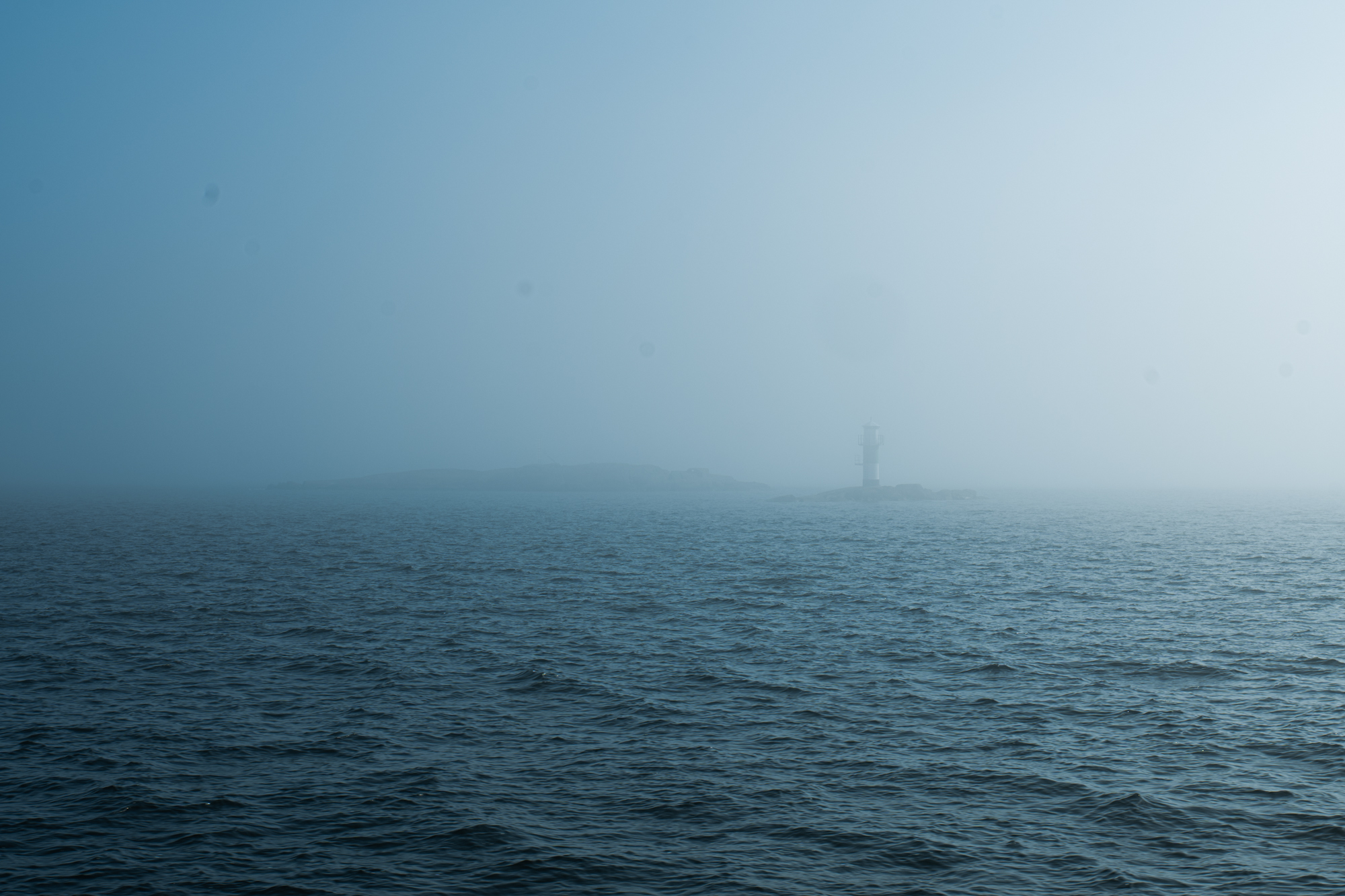
Oceanographic modelling shows that the Baltic Sea has a hydrodynamic “memory effect”: water‑soluble pollutants and nutrients have an effective environmental half‑life of around 26 years, and the system continues to export roughly 3 % of its contamination per year even after emissions stop. This means that every pulse of nitrogen and phosphorus from sewage today can keep fuelling algal blooms and oxygen depletion for decades.[2]
Eutrophication is already recognised as one of the key pressures on the Baltic’s ecological status, driven mainly by land‑based inputs but increasingly also by local maritime sources such as shipping and boating. In shallow, semi‑enclosed bays and marinas where water exchange is slow, even small additional nutrient and organic loads can tip the system into chronic algal growth, murky water and episodic fish kills.
Blackwater
Blackwater, simply put, is sewage from toilets. It contains human faeces, urine and toilet paper, often mixed with flush water and tank chemicals. It typically has high concentrations of organic matter, nitrogen and phosphorus, as well as very large numbers of bacteria, viruses and other pathogens. Ship sewage analyses show that untreated blackwater can contain several hundred milligrams of nitrogen and tens of milligrams of phosphorus per litre, far above levels in most coastal waters.
Discharging blackwater directly into the sea can contaminate bathing waters and shellfish beds, increasing the risk of gastrointestinal illness and other infections in humans. Its high nutrient and organic load also contribute to eutrophication and oxygen depletion – problems already severe in the semi‑enclosed and slow‑flushing Baltic Sea.
Greywater
Greywater is wastewater from everyday onboard activities: showers, bathroom and galley sinks, dishwashing, floor and deck cleaning, and sometimes laundry. It usually does not contain faeces, but it carries food residues, fats and oils, soaps and detergents, shampoo, cleaning agents and microplastics from synthetic textiles or cosmetics.
Recent studies show that greywater is chemically complex. A ship‑based investigation using high‑resolution mass spectrometry detected 86 compounds in greywater, including pharmaceuticals, stimulants, tobacco and food‑related products, personal care ingredients, UV filters, surfactants, per‑ and polyfluoroalkyl substances (PFAS), plasticisers and flame retardants, many at microgram‑per‑litre levels.[3]
The scary part? Most of it is still released straight into the sea, completely untreated. Scientists recently analysed greywater from cruise ships and found pollution levels far beyond international safety limits:
Phosphorus: up to 42 mg/L (limit: 1) in laundry greywater
Nitrogen: up to 34 mg/L (limit: 20) in galley greywater
Organic matter (BOD₅): 430 mg/L (limit: 25)
That’s as toxic as raw municipal sewage and the same applies to greywater from sailboats. And in a sea like the Baltic - nearly enclosed, with very limited water exchange and a renewal time of about 30 years - these pollutants don’t just disappear. They accumulate.[4]
At the scale of the entire Baltic, all ships are estimated to generate around 5.5 million cubic metres of greywater every year, which is potentially discharged directly into the sea, carrying roughly 159 tonnes of nitrogen and 26.4 tonnes of phosphorus annually.
Pharmaceuticals – emerging environmental contaminants
Pharmaceutical residues and caffeine are a class of emerging environmental contaminants. They enter wastewater mainly through normal use of medicines, coffee, tea and soft drinks: our bodies excrete unmetabolised substances in urine and faeces, which then end up in blackwater and, after washing and cleaning, in greywater. On land, most of this mixture passes through municipal wastewater treatment plants, which were not originally designed to remove pharmaceuticals and other micropollutants; many substances pass straight through into rivers and seas. On boats without advanced treatment, the pathway is even more direct.[5]
For the Baltic Sea, studies have already detected numerous pharmaceuticals in seawater at nanogram‑per‑litre concentrations. Survey of southern Baltic waters analysed concentration of 13 pharmaceuticals, with the highest measured concentration of the painkiller ketoprofen – reaching 135 ng/L. Among the most frequently detected compounds where antibiotics such as: sulfamethoxazole and trimethoprim (antibiotics used primarily to treat and prevent bacterial infections, most notably urinary tract infections and travelers' diarrhea), and the antibiotic enrofloxacin (antibiotic used exclusively in veterinary medicine to treat bacterial infections in dogs, cats, birds, reptiles, and livestock). These residues escape treatment plants across the region and reach the sea, where they can affect wildlife.[6]
In the Helsinki area, blue mussels growing near a major wastewater outfall have been found to accumulate common pharmaceuticals such as diclofenac, ibuprofen and ketoprofen, demonstrating that drug residues from human use reach the Baltic and enter the marine food web.[7]
Several pharmaceuticals detected in Baltic waters are designed to act on the human nervous or hormonal systems and can similarly affect fish and invertebrates. A long‑term experiment on guppies exposed over multiple generations to the antidepressant fluoxetine (the active substance in Prozac) – a compound frequently detected in wastewater worldwide – found dose‑dependent changes in behaviour, body condition and sperm quality, making males more predictable, less active and less successful in reproduction. The study showed that chronic exposure to fluoxetine can erode behavioural diversity and reduce the capacity of fish populations to adapt to other environmental stressors.[8]
What sailors can do
For sailors and small‑boat owners, the leverage points are surprisingly concrete. Even without advanced treatment technologies, recreational boaters can significantly reduce the impact of greywater and blackwater they carry.
- Use the port's pumping system to dispose of all produced wastewater. If this is not possible, the discharge of grey water, black water, and bilge water is prohibited in ports and within a 3-nautical-mile zone.
- Use toilets and showers on land whenever possible. While on board aim for shorter, “navy style” showers and close taps while soaping or brushing teeth.
- Make greywater less harmful: Choose phosphate‑free, biodegradable cleaning and personal‑care products, free from microplastics and unnecessary antibacterial additives. Limit your consumption of cleaning products by being mindful of the prescribed doses. Collect food scraps, oils and fats with solid waste instead of rinsing them down the sink.
- Install and actually use holding tanks for black water. Many pleasure boats in the Baltic now have holding tanks, but studies show that lack of clear rules and pump‑out infrastructure means they are not always used. Make “no discharge in port, bays or archipelagos” your personal rule – even where the regulations are silent.
- Manage grey water as a pollutant, not as “just a bit of soap”. Collect galley water in a portable container when moored and empty it in the marina drainage system, and avoid discharging large grey‑water volumes in small coves and nature harbours.
- Choose low‑phosphorus, readily biodegradable detergents and personal‑care products. Nutrient‑free dishwashing liquids and shampoos reduce the eutrophication potential of any unavoidable discharges.
- Plan passages to pump out and deliver wastewater. Integrate pump‑out stations into route planning in the same way as fuel stops, especially in popular archipelago and lagoon areas.
Two things marina operators can do
- Build wastewater reception into the basic marina offer
Under EU Directive 2019/883 on port reception facilities, EU Member States must ensure that ports and marinas provide “adequate” facilities to receive ship‑generated waste without undue delay, implementing MARPOL discharge bans on land. This includes sewage from ships, and in practice many marinas in the Baltic already host fixed or mobile pump‑out units for recreational craft. However, enforcement reports show that the lack of convenient reception facilities and practical incentives remains a key reason why discharges at sea continue. For ECOmarinas, this means:
- Installing reliable, easy‑to‑use pump‑out points that can serve the actual fleet including small sailing boats, motor boats and charter yachts.
- Integrating the cost of sewage reception into harbour fees (“no special fee”) to remove any financial disincentive, a mechanism that earlier EU rules showed was effective in increasing waste delivery.
- Providing clear signage and information on how to connect, what can be pumped, and where grey and black water from tanks can be delivered when available.
- Monitor, communicate and cooperate on water quality
UNCLOS obliges States to “promote studies, undertaking programmes of scientific research and encourage the exchange of information and data acquired about pollution of the marine environment.” In practice, marinas are ideal local partners for such monitoring:
- Work with local universities or citizen‑science programmes to monitor bacteria (E. coli, intestinal enterococci) and basic physico‑chemical parameters (nutrients, chlorophyll, transparency) in harbour basins over the season.
- Display simple “health of the harbour” dashboards for sailors and local residents; this has been shown in freshwater houseboat studies to help communicate links between boat numbers, water temperature and bacterial peaks.
- Use monitoring results to refine rules: for example, restricting overnight stays with full crews during heatwaves in poorly flushed basins, or prioritising investments in additional pump‑out capacity where repeated peaks are detected.
-----------------------------------------------------------------------------------------------------------------------------------------------------------------------------------------------------------------------------------
[1] J.T. Mujingni, E. Ytreberg, I.-M. Hassellöv, G.B.M. Rathnamali, M. Hassellöv, K. Salo. Sampling strategy, quantification, characterization and hazard potential assessment of greywater from ships in the Baltic Sea, Marine Pollution Bulletin, Volume 208, 2024.
[2] Mu Lin a b, Jun She b, Jens Murawski b, Xiaolin Hou a, Jixin Qiao, Long-term environmental risks of the Baltic Sea's "memory effect" revealed by ocean modeling and observation of reprocessing-derived radiotracers
[3] García-Gómez E, Gil-Solsona R, Mikkolainen E, Hytti M, Ytreberg E, Gago-Ferrero P, Petrović M, Gros M. Identification of emerging contaminants in greywater emitted from ships by a comprehensive LC-HRMS target and suspect screening approach. Environ Pollut. 2025 Feb 1
[4] J.T. Mujingni, E. Ytreberg, I.-M. Hassellöv, G.B.M. Rathnamali, M. Hassellöv, K. Salo. Sampling strategy, quantification, characterization and hazard potential assessment of greywater from ships in the Baltic Sea, Marine Pollution Bulletin, Volume 208, 2024.
[5] https://interreg-baltic.eu/all/how-to-reduce-pharmaceutical-emissions-posing-a-threat-to-wildlife-in-the-baltic-sea/
[6] Borecka M, Siedlewicz G, Haliński ŁP, Sikora K, Pazdro K, Stepnowski P, Białk-Bielińska A. Contamination of the southern Baltic Sea waters by the residues of selected pharmaceuticals: Method development and field studies. Mar Pollut Bull. 2015 May 15;94(1-2):62-71.[
[7] https://itameri.fi/en/state-of-the-baltic-sea/harmful-substances/pharmaceuticals/
[8] Daniela Correia a, Inês Domingues a, Melissa Faria b, Miguel Oliveira a: Effects of fluoxetine on fish: What do we know and where should we focus our efforts in the future?